What You’ll Love About This Recipe
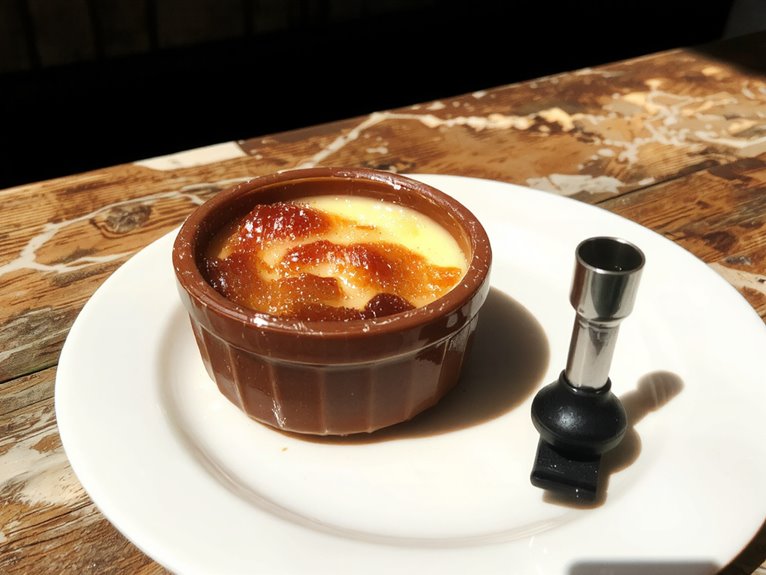
Making creme brulee at home is easier than you think, and the results are absolutely heavenly. You’ll love how it turns a few simple ingredients into a show-stopping dessert. The creamy custard base is smooth and rich, while the crunchy caramelized sugar topping adds the perfect contrast. It’s a dessert that feels fancy but is surprisingly doable, even for beginners. Plus, you’ll feel like a pro chef with every satisfying crack of the sugar crust!
Recipe
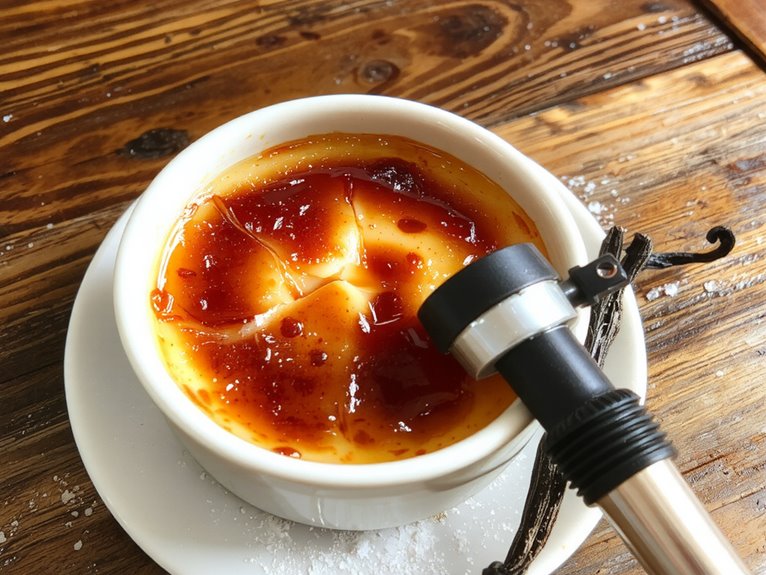
Creme Brulee is a classic French dessert known for its rich custard base and contrasting layer of hard caramel. This recipe is straightforward and yields a creamy, indulgent treat that’s perfect for any occasion.
Ingredients:
- 1 cup heavy cream
- 1 cup whole milk
- 1 vanilla bean, split and seeds scraped (or 1 tsp vanilla extract)
- 4 large egg yolks
- 1/4 cup granulated sugar (for the custard)
- 1/4 cup granulated sugar (for caramelizing the top)
Instructions:
- Preheat the oven to 325°F (160°C) and place four ramekins in a baking dish.
- In a saucepan, combine the heavy cream, milk, and vanilla bean seeds (or extract). Heat over medium heat until warm but not boiling. Remove from heat and let steep for 10 minutes.
- In a separate bowl, whisk the egg yolks and 1/4 cup sugar until pale and slightly thickened.
- Slowly pour the warm cream mixture into the egg mixture, whisking constantly to combine. Strain the custard through a fine-mesh sieve to remove any lumps.
- Divide the custard evenly among the ramekins. Fill the baking dish with hot water until it reaches halfway up the sides of the ramekins.
- Bake for 45-50 minutes or until the custard is set but still slightly jiggly in the center. Remove from the oven and let cool. Chill in the refrigerator for at least 2 hours.
- Before serving, sprinkle 1-2 teaspoons of sugar evenly over the top of each custard. Use a kitchen torch to caramelize the sugar until it forms a golden, crispy layer.
Notes:
- Confirm the custard is fully chilled before caramelizing the top.
- If you don’t have a kitchen torch, you can caramelize the sugar under a broiler, but watch closely to avoid burning.
Equipment:
- Ramekins
- Baking dish
- Saucepan
- Whisk
- Fine-mesh sieve
- Kitchen torch
Time:
Prep Time: 20 minutes
Cooking Time: 50 minutes
Chilling Time: 2 hours
Cuisine: French
Serving: 4 servings
Nutrition
The nutritional information for this creme brulee recipe is based on one serving.
| Nutrient | Amount per Serving |
|---|---|
| Calories | 350 |
| Fat | 25g |
| Saturated Fat | 15g |
| Cholesterol | 250mg |
| Sodium | 80mg |
| Carbohydrates | 20g |
| Sugar | 18g |
| Protein | 6g |
What To Serve With It
I love pairing my creme brulee with fresh fruit like berries or sliced mango—it adds a revitalizing contrast to the rich custard. A glass of dessert wine, like a sweet Riesling or Sauternes, can also elevate the experience, making it feel extra special. It’s all about finding those little touches that make your dessert shine!
Fresh Fruit Pairings
When you’re serving homemade creme brulee, fresh fruit can add a bright, invigorating contrast to its rich, creamy sweetness. I love pairing it with berries like strawberries, raspberries, or blueberries—their tartness cuts through the decadence perfectly. Slices of kiwi or mango bring a tropical twist, while citrus segments, like orange or grapefruit, offer a zesty kick. For a simpler option, a handful of pomegranate seeds adds a playful crunch. Sometimes, I’ll even arrange a mix of fruits for a colorful presentation. The key is to keep it fresh and light, letting the fruit enhance rather than overshadow the dessert’s elegance.
Complementary Dessert Wines
Since creme brulee’s creamy sweetness begs for balance, a well-chosen dessert wine can elevate the whole experience. I love pairing it with a chilled Sauternes, its honeyed notes complementing the caramelized sugar perfectly. A late-harvest Riesling also works wonders, offering bright acidity to cut through the richness. If you’re feeling adventurous, try a Muscat; its floral aroma adds a surprising twist. Personally, I find Port wine irresistible—its deep, nutty flavors deepen the dessert’s complexity. Always serve the wine slightly chilled to keep it invigorating. Experiment and find your favorite match—it’s like discovering a new flavor adventure every time!