What You’ll Love About This Recipe
Making your own kimchi is easier than you might think, and the results are packed with flavor. You’ll love this recipe because it’s fresh, customizable, and perfect for sharing. Homemade kimchi is healthier than store-bought, letting you control the ingredients and spice level. Plus, it’s a fun way to explore Korean cooking and impress your family and friends. Once you try it, you’ll see why this tangy, spicy ferment is a kitchen favorite!
Recipe
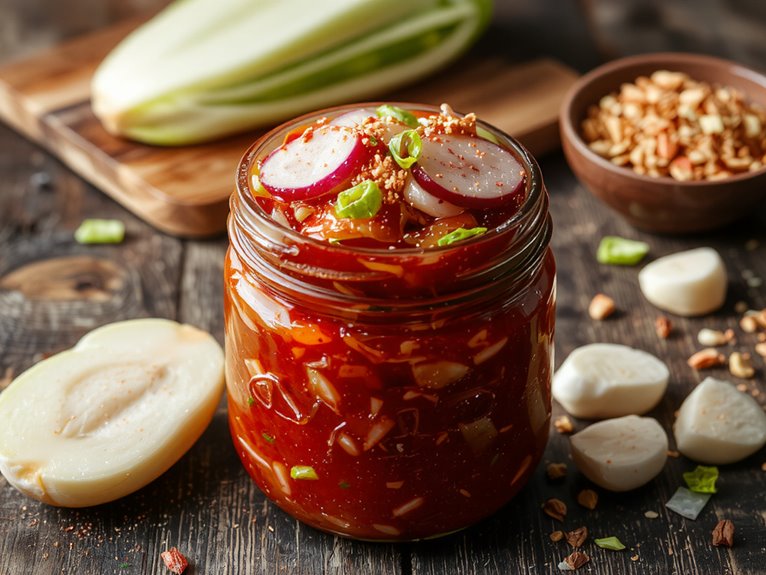
Kimchi is a traditional Korean fermented side dish made with napa cabbage, radish, and a spicy, tangy seasoning. This recipe delivers authentic flavors with a perfect balance of spice and umami.
Ingredients
- 1 large napa cabbage (about 2 lbs)
- 1/4 cup kosher salt
- 1 cup water
- 1 tbsp glutinous rice flour (or all-purpose flour)
- 1/4 cup Korean red pepper flakes (gochugaru)
- 1/4 cup fish sauce
- 2 tbsp salted shrimp (saeujeot)
- 1 tbsp minced garlic
- 1 tsp grated ginger
- 1 tbsp sugar
- 1/2 cup Korean radish (mu), julienned
- 2-3 green onions, cut into 1-inch pieces
Instructions
- Prepare the cabbage: Cut the cabbage lengthwise into quarters, leaving the core intact. Rinse under cold water.
- Salt the cabbage: Dissolve salt in water. Rub salt between the cabbage leaves, focusing on the thick white stems. Let sit for 1-2 hours, flipping occasionally.
- Rinse and drain: Rinse the cabbage thoroughly under cold water to remove excess salt. Drain well.
- Make the porridge: In a small pot, mix rice flour with 1 cup water. Cook over low heat, stirring until thickened (like thin paste). Let cool.
- Prepare the paste: In a large bowl, combine cooled porridge, gochugaru, fish sauce, salted shrimp, garlic, ginger, and sugar. Mix well.
- Add vegetables: Stir in radish and green onions.
- Coat the cabbage: Spread the paste evenly between each cabbage leaf, starting from the outer leaves.
- Ferment: Pack kimchi tightly into a jar, pressing down to remove air bubbles. Leave 1-2 inches of space at the top.
- Store: Let ferment at room temperature for 1-2 days, then refrigerate for up to a month.
Notes
- For vegan kimchi, omit fish sauce and shrimp; use soy sauce or kelp powder.
- Fermentation time affects sourness—taste daily to find your preference.
Equipment
- Large mixing bowl
- Gloves (for handling spicy paste)
- Glass jar or airtight container
Time
- Prep time: 2 hours
- Cooking time: 10 minutes
- Fermentation time: 1-2 days
Cuisine
Korean
Serving
Makes about 1 quart
Nutrition
Kimchi is a fermented vegetable dish rich in probiotics and nutrients. Here’s the nutritional breakdown per 100g serving.
| Nutrient | Amount |
|---|---|
| Calories | 15 kcal |
| Carbohydrates | 2.4 g |
| Protein | 1.1 g |
| Fat | 0.5 g |
| Fiber | 1.6 g |
| Sodium | 498 mg |
| Vitamin C | 18 mg |
| Calcium | 33 mg |
What To Serve With It
I love pairing my homemade kimchi with simple, flavorful dishes that let its tangy spice shine. Steamed rice, grilled meats, or even a bowl of ramen make perfect companions, balancing the bold flavors. You can also try it with scrambled eggs or stir-fried veggies for a quick, tasty meal.
Complementary Side Dishes
Kimchi’s bold flavor pairs perfectly with a variety of dishes, and I love serving it alongside steamed rice to balance its tangy kick. I often pair it with grilled meats, like bulgogi or BBQ chicken, to add a revitalizing contrast. A simple cucumber salad with sesame oil and garlic is another favorite, as its cool crunch complements the kimchi’s spice. Sometimes, I’ll add a fried egg on top of kimchi fried rice for a quick, satisfying meal. For a lighter option, try it with tofu or a bowl of miso soup. These combos make kimchi shine while keeping meals flavorful and balanced.
Perfect Pairing Suggestions
When it comes to pairing kimchi, there’s no shortage of options to make your meal shine. I love serving it alongside grilled meats like bulgogi or crispy pork belly—it cuts through the richness beautifully. Rice bowls with fried eggs or tofu are another favorite, adding depth to every bite. For breakfast, I’ll toss it into scrambled eggs or toast avocado slices. Soups and stews, like kimchi jjigae, let it shine as a star ingredient. And don’t get me started on tacos—kimchi brings a tangy kick! It’s versatile, so don’t be afraid to get creative—your taste buds will thank you!